People often sign up for the ORSC coach training program because they want to work with teams. It can be surprising to learn that relationship systems coaching applies to pairs and partnerships as well as global organizations. You can even coach your own inner system.
Rather than using one-on-one techniques in a group setting, we work with the whole brilliant, multifaceted system as the client.
This approach was groundbreaking when Marita Fridjhon and Faith Fuller first introduced it more than 20 years ago. It is now embedded in the International Coaching Federation (ICF) team coaching competencies.
The original team coaching model
Organization and Relationship Systems Coaching (ORSC™) is based on a simple idea. Each team or system has its own intelligence, and we can interact with it. The focus shifts from the people in a relationship system to the system itself.
ORSC training develops Relationship Systems Intelligence (RSI™), an awareness and appreciation of the living, evolving relationship system. As a relationship systems worker, you interpret your own experience (and that of others) as an expression of the larger system.
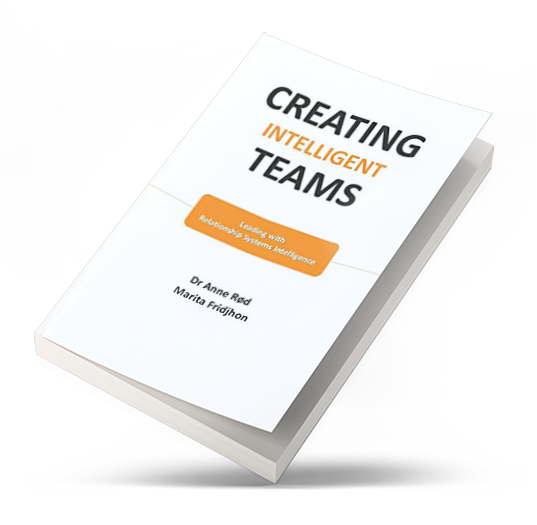
In her book Relationship Matters, ORSC co-creator Faith Fuller calls RSI “the knowledge and craft of how to be skillful in any relationship circumstance.”
Why take a systems-inspired view?
- In a complex, continually changing business environment, no one leader can have all of the answers. Nor can leaders be everywhere at once, or have the same perspective as those on the front lines.
- When we draw on the wisdom of the web of connection between team members—the relationship system itself—we can develop better solutions.
- Relationship systems coaching provides practical tools, skills and a road map to create truly collaborative teams.
Research on collective intelligence supports taking a systems approach. In a 2022 paper, Janssens, Meslec and Leenders write that in order to tackle complex problems, team members need to coordinate their efforts. They must either have or develop the ability to interact effectively with each other. Doing so makes the most of the combined intelligence of the group.
Some people instinctively know how to nurture great relationship, and some systems naturally have incredible chemistry. ORSC tools and skills foster better connection in systems that might be ineffective, hamstrung by toxins, or whose members simply want to be at the top of their game.
Adapting to groups of any size
ORSC is similar to one-on-one, group and team coaching methods, but focuses on the system rather than on individual relationships.
The tools and skills are neutral, and adapt to any situation.
In decades of coaching systems, we have uncovered five truths about the way systems work. We call them the five principles of Relationship Systems Intelligence.
In exploring the principle that each system has its own personality or identity, we explain a primary concept which underpins this approach.
1 – The system is the client.
Here’s a riddle. When does one plus one make one?
ORSC teaches us how to work with what we call the Third Entity™. This is the collective vibe or essence that appears when we are in relationship with each other. Just as people have distinct personalities, so does the Third Entity of any relationship.
For example, we think of John, Paul, George and Ringo as one collective entity—the Beatles.
The idea of a Third Entity goes back as far as the time of Aristotle, who wrote, “The totality is not, as it were, a mere heap, but the whole is something beside the parts.” Apple founder Steve Jobs later echoed these words in summarizing his leadership style.
“My model for business is the Beatles. They balanced each other and the total was greater than the sum parts. And that's how I see business. Great things in business are never done by one person, they are done by a team of people."
Steve Jobs
2 – Each system is intelligent.
Instead of working one-on-one with team members, coaches interact with the system as a whole.
Systems can be any size, from partnerships to teams to global organizations. We work with what we call the Third Entity, or the “personality” of a system.
The nature of a system will change according to who is present. For example, the Third Entity of two colleagues on their own is different than the Third Entity of the whole group.
Continuing with the example of the Beatles, it was their Third Entity— the relationship system—that wrote the music. As John, Paul, George and Ringo grew as individuals, so did the relationship. Their music, a tangible reflection of their Third Entity, continued to evolve and change.
3 – ORSC works with the invisible network of connection between team members.
Even in large systems, we are all connected. In the foundational ORSC courses, we use a string exercise to show this invisible network between team members. When one string is pulled, the movement ripples out to affect everyone else.
Along with supporting the invisible network of connection within systems, we:
- help people to see and adjust their impact.
- develop effective relationship skills.
- and support alignment on shared values and goals.
4 – We communicate on multiple levels.
People don’t need to be told verbally that something is happening below the surface. We see, hear and sense what is going on, often on an instinctive level.
ORSC training explains how to recognize these channels of communication, so we observe the system in much the same way that we would an individual. It’s an interactive and ongoing process.
5 – Systems know what they need to move forward.
Systems know what they need to move forward. Our role is not to direct (as with consulting) or heal (as with therapy). Instead, we coach the system to make its own decisions.
Systems-inspired coaching and leadership incorporates concepts from thought leaders in the field of relationship. These include:
- ways to improve relationships and combat toxins (John and Julie Gottman).
- developing emotional and social intelligence (Daniel Goleman), as well as Relationship Systems Intelligence (Marita Fridjhon and Faith Fuller).
- and consciously influencing the mood and energy of a team (Amy Mindell).
“The anchor of all my dreams is the collective wisdom of mankind as a whole.”
Nelson Mandela
Want to tap into the collective wisdom of a system? If you’re ready to begin your ORSC journey, start here.
Frequently Asked Questions
What is ORSC?
ORSC, or Organization and Relationship Systems Coaching, is a coach training and mentoring program which focuses on the relationships within systems of any size. Throughout the training, ORSC coaches learn to recognize the complexity of system relationships. They understand that what happens in one part of the system will ripples out to affect the entire organization. ORSC develops Relationship Systems Intelligence, an awareness and ability to work with the intelligence of the system to develop holistic strategies.
The training consists of a foundational course and four intermediate-level courses, followed by a mastery-level Certification program. Coaches who complete ORSC receive 180.5 ICF CCEs in total, are recognized as experts in team coaching, and are well on their way to completing ACC/PCC and ACTC requirements.
The first systems coaching program to be recognized by the International Coaching Federation, ORSC is now used by coaches around the world.
Is ORSC meant for coaching business teams?
Many people register for ORSC because they want to become experts in team coaching. However, the tools and skills are neutral and can be used to improve any relationship.
Who created ORSC?
ORSC is the brainchild of CRR Global co-founders Marita Fridjhon and Faith Fuller, who combined influences from psychology, coaching, consulting, social work and even Buddhism in creating this skillset.
Is ORSC a recognized coach training program?
Yes, ORSC is a Level 2 ICF Accredited program. In fact, ORSC was the first team and systems coaching program to be recognized by the ICF. By completing the full series and the mastery-level program of ORSC Certification, coaches can add 180.5 CCEs to their tally.
ORSC also provides the 60 hours of team coach training required for Advanced Certification in Team Coaching.
What other programs does CRR Global offer?
As the Institute for Systems-Inspired Coaching and Leadership, we equip and evolve systems-inspired coaches and leaders through coach training, mentor coaching, coaching supervision, leadership development and other professional development services.
Is ORSC for coaching families or for business?
This model applies to any situation. ORSC is a neutral model that can be used to support systems of every kind. Couples, families, partnerships, Agile teams, not-for-profits, Fortune 500 companies, government, international organizations and more all benefit from the skillset.